
20 British Crime Dramas That Changed TV Forever

GET YOUR STREAMING GUIDE HERE
In some cases, we earn commissions from affiliate links in our posts.
Last Updated on March 25, 2026 by Stefanie Hutson
British crime dramas have long set the standard for intelligent, compelling television. While many truly lovely shows have come and gone, a select few have fundamentally altered the crime drama landscape – introducing new storytelling techniques, character archetypes, and visual styles that continue to influence productions today. Here are twenty that redefined what TV crime dramas could be.
Please note that while we've listed streaming outlets below, this information is geared towards our largely American audience, and was accurate at time of writing. If you're accessing this page at a much later date, please be mindful that available services may have changed.
1. Inspector Morse (1987-2000)

No British detective casts a longer shadow than John Thaw's Oxford-based Inspector Morse. The show's masterstroke was a radical deceleration: where other police procedurals raced toward resolution, Morse lingered. That willingness to let character breathe – his love of real ale, cryptic crosswords, and doomed romantic attachments – built a new kind of TV detective, one whose inner life mattered as much as the case.
Oxford itself became inseparable from the show's identity, proving that a well-chosen setting can carry as much dramatic weight as any character. The feature-length format gave each story room to develop with the depth and production values of a film. And the franchise's continuation through Lewis and Endeavour speaks to just how deep the well runs.
Where to stream: BritBox, Prime Video
2. Prime Suspect (1991-2006)

Helen Mirren's DCI Jane Tennison didn't just happen to be a woman solving murders – the show made her gender central to the drama (in a time where that was still fairly revolutionary). Created by Lynda La Plante, Prime Suspect depicted the institutional sexism Tennison faced with a documentary rawness that felt closer to journalism than entertainment. Male colleagues froze her out. Superiors questioned her judgment. And Tennison pushed through it with a single-mindedness that sometimes cost her everything outside the job.
The visual style matched that honesty – no glossy lighting, no dramatic score cues, just the fluorescent hum of an incident room at 2 a.m. Mirren's performance remains the benchmark for complex female leads in crime fiction, and La Plante's scripts proved that crime television could tackle serious social questions without sacrificing a single ounce of tension.
Where to stream: BritBox, Peacock, Tubi, Pluto
3. Cracker (1993-1996, 2006)

Before Cracker, TV detectives were allowed a few quirks – a fondness for orchids, a taste for fine wine. Robbie Coltrane's criminal psychologist Fitz was something else entirely: overweight, chain-smoking, gambling-addicted, alcoholic, unfaithful, and deliberately cruel to the people closest to him. Creator Jimmy McGovern wasn't interested in whodunnit – he wanted to know why.
The show frequently revealed the killer early, then spent its energy unpacking the social and psychological conditions that produced them. Episodes tackled racism, sexual violence, and class with an intensity that made viewers uncomfortable in ways that felt necessary. That shift from mystery to motive – the “why-dunnit” – opened up territory that psychological crime dramas have been mining ever since.
Where to stream: BritBox, Pluto
4. The Sweeney (1975-1978)

John Thaw (years before Morse) and Dennis Waterman (with a very unique hairstyle) tore up the rulebook as Flying Squad detectives Regan and Carter. Before The Sweeney, British TV police were largely polite, procedural, and studio-bound. This show dragged them onto the actual streets of London with handheld cameras, car chases through real traffic, and punch-ups that looked like they hurt.
Regan bent rules, lost his temper, and drank too much – and the show never pretended otherwise. The moral ambiguity was startling for its era. Every gritty British cop show since owes something to The Sweeney‘s willingness to show policing as messy, physical, and ethically compromised.
Where to stream: BritBox
5. Broadchurch (2013-2017)
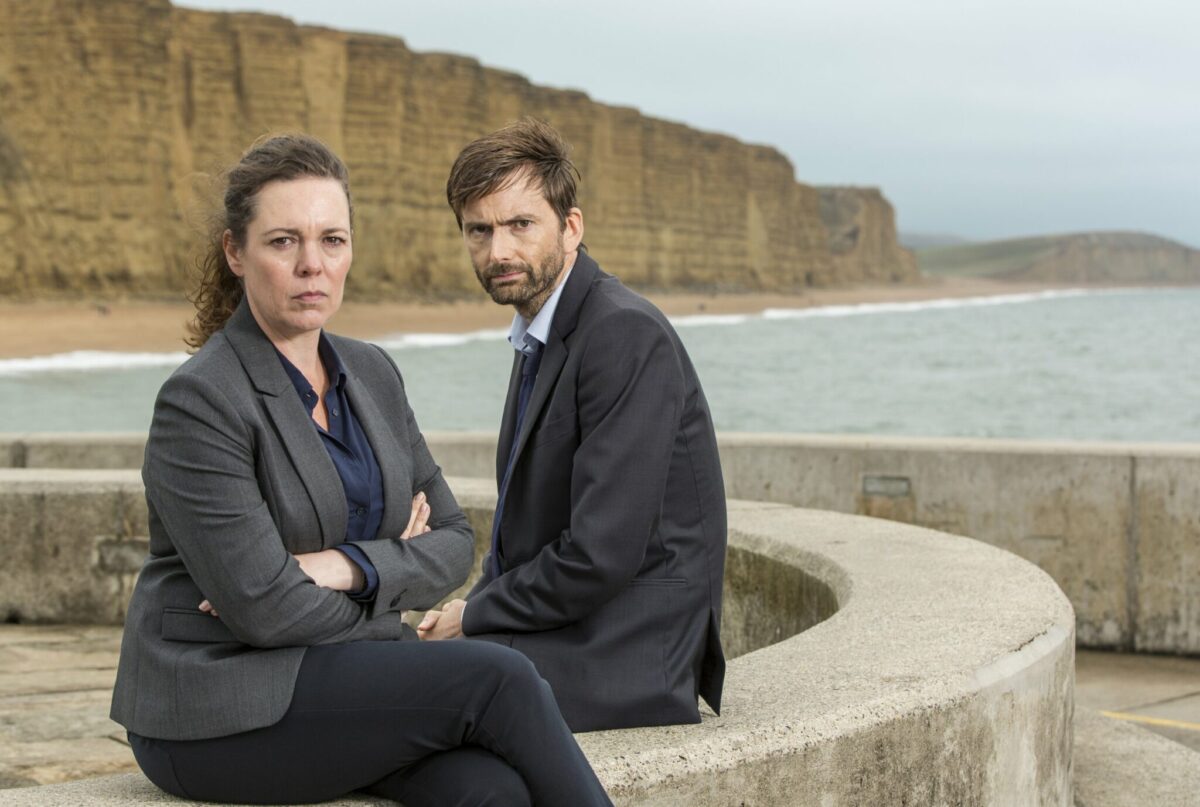
Chris Chibnall's series asked a question that crime dramas had mostly ignored: what happens to a community outside the spotlight of the detectives? Set in a small Dorset coastal town after the murder of a young boy, Broadchurch followed the investigation but devoted equal attention to the ripple effects – neighbors suspecting neighbors, a family disintegrating under media scrutiny, a town's self-image cracking open.
David Tennant and Olivia Colman anchored the series, but the real star was the coastline. The Dorset cliffs became as much a part of the storytelling as any dialogue scene. The show's first season also demonstrated the power of the limited-series format for crime drama – a single case, fully resolved, with no need to stretch or manufacture a second mystery.
Where to stream: Netflix, Peacock, Tubi, PBS
6. Luther (2010-2019)

Idris Elba's DCI John Luther lives right on the line between detective and the people he hunts. Creator Neil Cross built the show around that tension: Luther understands criminals because his own psychology isn't entirely dissimilar. The series plays more like a psychological thriller than a standard procedural, with a moody, shadow-drenched London that feels almost expressionistic.
But the show's greatest and most lasting contribution might be Ruth Wilson's Alice Morgan – a brilliant, amoral murderer who becomes Luther's most trusted confidante. That relationship, equal parts menace and intimacy, complicated the traditional detective-villain dynamic in ways that later shows have repeatedly tried to replicate. And honestly, I'm not sure we'll ever stop holding out hope for an Alice spin-off.
Where to stream: Hulu, Acorn TV, BritBox, AMC+
7. Agatha Christie's Poirot (1989-2013)

Sir David Suchet didn't just play Hercule Poirot – he inhabited the role so completely across 70 episodes over 24 years that it became difficult to imagine anyone else in it. The show's commitment to Christie's source material was meticulous, extending to the Art Deco set design, the period costumes, even the way Suchet held a teacup.
That fidelity paid off: the series demonstrated that treating source material with genuine respect, rather than “updating” it out of recognition, could produce exceptional television. By adapting the complete Poirot canon – every single story – the show also set the standard for comprehensive literary adaptations.
In a world where most new period drama adaptations play fast and loose with the source material – even inserting modern sensibilities and modern music – this is the 1995 Pride & Prejudice of British crime TV (faithful and absolutely delightful).
Where to stream: BritBox, Acorn TV
8. Line of Duty (2012-present)

Jed Mercurio's police corruption drama did something deceptively simple: it made the interview room the most exciting location on television. The AC-12 interrogation scenes – sometimes running past ten or fifteen minutes, dense with procedural jargon and legal maneuvering – shouldn't work as entertainment, but they're electric.
The show built its tension from the language and rituals of actual police misconduct investigations, trusting audiences to keep up with terminology like “Reg 15 notices” and “duty of candour.” Its season-spanning conspiracies kept viewers guessing about the identity of corrupt officers at every level, and its focus on systemic failure rather than individual villainy shifted the conversation about what police dramas could examine.
Though episodes stopped for a number of years, there IS good news for fans of this one – they return to film season 7 in spring 2026, with an estimated premiere sometime in 2027.
Where to stream: BritBox, Acorn TV, Hulu, Tubi, Pluto
9. The Fall (2013-2016)

Most serial killer dramas make you wait to find out who the murderer is. Allan Cubitt's The Fall showed you from the first episode: Jamie Dornan's Paul Spector, a Belfast family man and bereavement counselor who strangles women at night. The show then tracked his activities in parallel with Gillian Anderson's DSI Stella Gibson as she hunted him.
That dual structure turned the series into something more unsettling than a standard thriller; it became an examination of voyeurism, control, and gender dynamics, with the audience uncomfortably aware of how much screen time they were spending inside a killer's perspective. Anderson's Gibson, coolly competent and unapologetic about her personal life, remains one of the most fully realized detective characters in recent memory.
Where to stream: BritBox, Acorn TV, AMC+, Tubi, Pluto, Fawesome, Peacock
10. Happy Valley (2014-2023)

Sally Wainwright set her police drama not in London or Oxford but in the Calder Valley of West Yorkshire, and the show is inseparable from that landscape – the rain-soaked hills, the terraced houses, the accents. Sarah Lancashire's Sergeant Catherine Cawood works at the local level, dealing with drug dealers and domestic violence alongside a personal history of devastating family trauma.
The genius of Happy Valley is its refusal to separate the personal from the professional: Catherine's past doesn't just haunt her, it drives every decision she makes on the job. The show proved that regional specificity – dialect, geography, class – isn't a barrier to international success but a source of authenticity that audiences worldwide respond to.
Where to stream: Netflix, BritBox
11. Taggart (1983-2010)
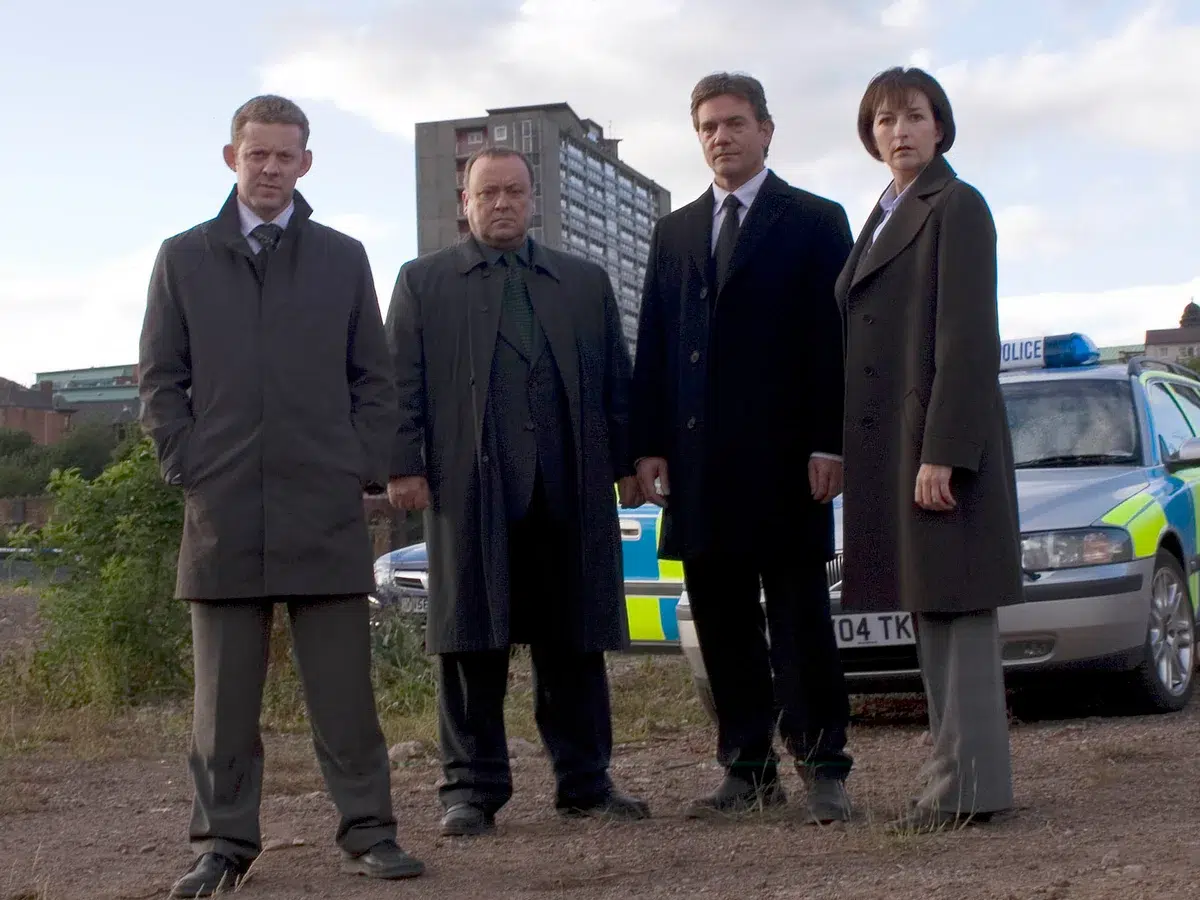
The longest-running Scottish crime drama made Glasgow a setting for serious television crime fiction at a time when most British shows defaulted to London or the Home Counties. “There's been a murder” entered the cultural lexicon, but Taggart's real legacy is more substantial than a catchphrase.
Over 27 years, it proved that regional voices, regional concerns, and regional accents belonged on primetime – and that audiences outside Scotland would watch. Without Taggart paving that road, it's hard to imagine shows like Shetland, Rebus, or any number of location-specific Scottish crime dramas getting greenlit.
Where to stream: BritBox
12. Midsomer Murders (1997-present)

On paper, Midsomer Murders shouldn't work. Picturesque English villages with murder rates that would alarm a warzone statistician. Murders where the weapon is a vat of beer or wheel of cheese. But the show found a tone – gently macabre, wryly funny, visually delightful – that audiences around the world latched onto and never let go.
Its longevity (approaching three decades now) comes from a consistent formula that still manages to surprise: each episode peels back the manicured hedgerows to find jealousy, greed, and old grudges festering underneath. The show essentially defined the modern “cozy crime” subgenre and demonstrated that traditional detective formats still have enormous international appeal when executed with confidence.
Where to stream: Acorn TV, Tubi, Pluto, Plex, Amazon Prime Video
13. The Bill (1984-2010)

Running for 26 years on a twice-weekly schedule, The Bill produced a portrait of British policing that no other show can match in sheer breadth. Its initial documentary-style approach – following uniformed officers and CID detectives through the mundane and the dramatic in equal measure – gave it an authenticity that felt earned rather than performed.
The ensemble cast approach, rotating between dozens of characters across Sun Hill police station, meant the show could examine policing from every angle: the beat copper, the ambitious detective, the desk sergeant, the superintendent navigating politics. As British policing itself changed over those decades, The Bill changed with it, creating an accidental but invaluable record of how law enforcement evolved.
Sadly, BritBox has now removed the handful of episodes they offered – so watching in the US would require tracking down a copy on DVD.
Where to stream: BritBox (no longer available)
14. Sherlock (2010-2017)

Steven Moffat and Mark Gatiss took a character everyone thought they knew and made him feel dangerous again. Benedict Cumberbatch's Holmes is abrasive, compulsive, and fun to watch – a man whose intellect is both his greatest asset and the thing that makes him nearly impossible to be around.
But the show's most lasting contribution is visual: the on-screen text messages, the graphic overlays showing Holmes's deductive process in real time, the way London was shot like a character with its own personality. Those techniques have now been borrowed by crime dramas (and other shows) worldwide.
Where to stream: BritBox, Hulu, AMC+, PBS
15. Foyle's War (2002-2015)
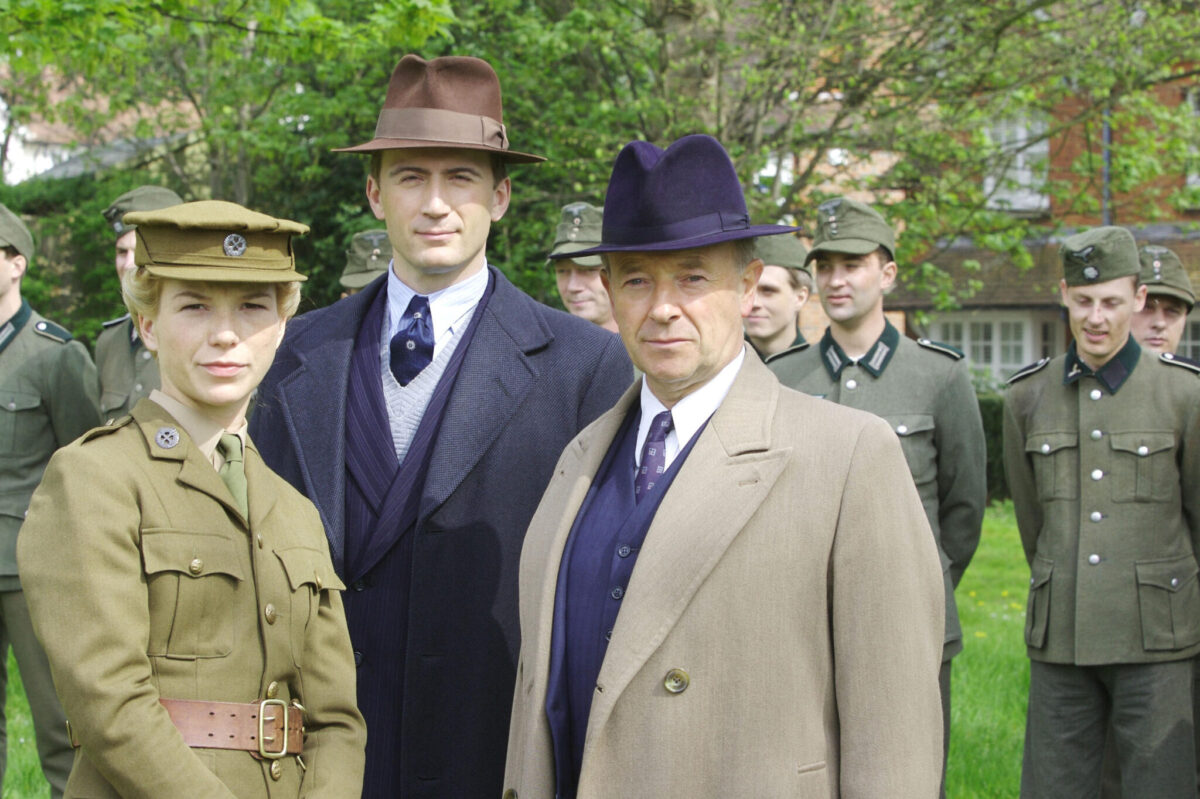
Anthony Horowitz's WW2-era series posed an unusual question: what does a detective do when the world is at war and murder is happening on an industrial scale? Michael Kitchen's DCS Foyle, quietly principled and lethally observant, investigated crimes on the home front during WWII and later during the early Cold War.
The show used its period setting not as window dressing but as moral terrain – each case forced Foyle (and the audience) to weigh individual justice against wartime necessity, patriotic duty against ethical compromise. Kitchen's performance, in which he conveyed volumes with a raised eyebrow or a carefully timed pause, showed that restraint could be far more compelling than theatrics.
Another interesting note? Anthony Horowitz was the creator of this one, but he also helped launch Midsomer Murders, writing several early episodes.
Where to stream: Acorn TV
16. Wallander (UK version, 2008-2016)

Kenneth Branagh brought Henning Mankell's Swedish detective to English-language audiences while keeping the atmosphere entirely Scandinavian. Shot on location in Ystad, Sweden, the show used its flat, wind-scoured landscapes to externalize Kurt Wallander's interior desolation. The camera lingered on empty fields, grey skies, and isolated houses in a way that made loneliness feel physical.
For many British TV fans, this was their first encounter with the “Nordic Noir” aesthetic – melancholy detectives, washed-out color palettes, existential dread – and it opened the door to a wave of Scandinavian crime imports and adaptations (not to mention purely British shows styled similarly, like Hinterland). Branagh's Wallander proved that the psychological cost of detective work could carry an entire series.
Where to stream: BritBox, Peacock
17. Wire in the Blood (2002-2008)

Adapted from Val McDermid's novels, Wire in the Blood was willing to go places that made other crime dramas look timid. Even today, we get emails from readers who didn't quite expect how raw and visceral this one can be (especially after seeing Robson Green in the comparatively tame Grantchester).
Robson Green's clinical psychologist Tony Hill didn't just profile killers – he tried to think like them, and the show made the audience feel the toll that process exacted. The series took the forensic psychology angle seriously, depicting profiling not as a magic trick but as an exhausting, sometimes sickening immersion in another person's pathology. That honest depiction of what it costs to spend your professional life inside the minds of violent criminals opened up a theme that later shows like Mindhunter and Hannibal would explore in depth.
Where to stream: Acorn TV, BritBox, Tubi, Prime Video
18. Life on Mars/Ashes to Ashes (2006-2010)

Take a modern police officer. Send him back in time to 1973. Watch him try to do twenty-first-century policing alongside Gene Hunt, a DCI whose idea of an interview technique involves a fist. Life on Mars and its sequel Ashes to Ashes blended police procedural with science fiction in a way nobody had attempted before, using the culture clash between eras to comment on how policing has changed – and what, if anything, has been lost.
The shows were funny, unsettling, and surprisingly moving, with a central mystery about the nature of Sam Tyler's experience that kept viewers debating long after the credits rolled. The dual-timeline structure has since become a go-to device for crime dramas dealing with cold cases and historical investigations.
Ashes to Ashes was the follow-up, and it starred Keeley Hawes. Though perhaps not as riveting as the first series, it offered explanations for some of the questions Life on Mars fans had after finishing the series – and it's still great fun.
It's also hard to talk about the shows without mentioning the phenomenal soundtracks. Both feature some of the most popular and atmospheric songs of the era – which may have been a challenge for copyright lawyers negotiating streaming rights around the world, but it's a true pleasure for us viewers.
Where to stream: BritBox
19. Unforgotten (2015-present)

Chris Lang's cold case drama does something that seems ordinary, but it's actually kind of unusual within the genre: it treats everyone – victims, suspects, investigators – as fully fleshed-out and human. Suspects are not just placeholders. Victims are complex. Nicola Walker and Sanjeev Bhaskar play their detective duo with a warmth and mutual respect that feels natural, not performed.
Each season unearths an old crime and traces its consequences through the decades, revealing how a single act of violence leaves marks on people who may not even realize they're carrying them. The show resists easy moral categories; its suspects are often sympathetic, their crimes born of circumstances rather than malice, and the question of whether justice decades later actually heals anything is often left genuinely open. That moral complexity has raised the bar for how crime dramas handle the passage of time.
Where to stream: PBS Masterpiece
20. Endeavour (2012-2023)

Prequels are notoriously difficult – the audience already knows where the character ends up, so the challenge is making the journey feel surprising anyway. Shaun Evans's portrayal of the young Endeavour Morse managed exactly that, finding vulnerability and uncertainty in a character audiences thought they knew inside out.
The show's 1960s Oxford, rendered with painstaking attention to period detail and the inclusion of real life then-current events, became a setting where post-war certainties were crumbling and a young detective's idealism was being tested by reality. Endeavour demonstrated that a spin-off, handled with enough care and ambition, can stand entirely on its own merits – and that an origin story can deepen rather than diminish what came before.
It's also beautiful. Oxford is a stunning city to begin with, but each episode is treated more like a movie than a TV episode, shot with maximum attention to mood and atmosphere. From the sets to the wardrobe to the background music, you can tell almost instantly that nothing was left to chance.
Where to stream: PBS Masterpiece
Want more lists to help you discover great British TV shows & Films?
Try these:
- 25 Charming British Films You Can Stream
- The 15 Best British Period Dramas Featuring Dame Maggie Smith
- 13 British TV Shows Americans Enjoy More Than Brits
Save it to Pinterest!


